



Dress Shoe Widths Explained: D vs E vs EE vs EEE (Wide Fit Guide)
In men's shoes, D is standard (medium) width, E is wide, EE (2E) is extra wide and EEE (3E) is extra extra wide; each step adds roughly 1/8 inch (about 3 to 5 mm) across the ball of the foot. Width is separate from length, so if a shoe pinches at the sides, go up a width, not a size. Measure the widest part of your foot in the evening, compare it with a width chart, and remember that charts vary by brand and last. Derbies and monk straps are the most forgiving styles for wide feet.
Key Takeaways
- D = standard men's width, E = wide, EE / 2E = extra wide, EEE / 3E = extra extra wide.
- Width is not length: a wider shoe is the same length; do not size up to get more width.
- Each step adds roughly 1/8 inch (3 to 5 mm) across the forefoot; exact numbers vary by brand.
- Measure both feet in the evening and use the larger one.
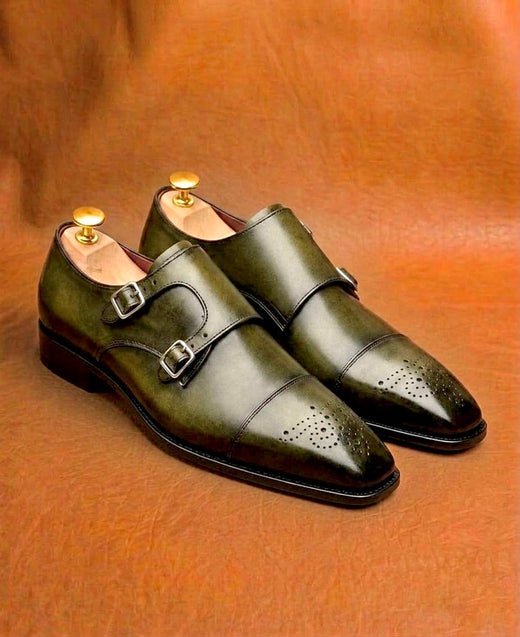
- Best styles for wide feet: derbies, monk straps and Chelsea boots; sleek oxfords are the least forgiving.
What Do Shoe Width Letters Mean?
| Letter | Also written | Men's width | Who it suits |
|---|---|---|---|
| B | Narrow | Narrow | Slim, low-volume feet |
| C | Narrow-medium | Slightly narrow | Between narrow and standard |
| D | M, Medium | Standard (default) | Most men; the width you get if none is listed |
| E | W, Wide | Wide | Feet that feel squeezed in D |
| EE | 2E, Extra wide | Extra wide | Broad forefoot, bunions, swelling |
| EEE | 3E | Extra extra wide | Very broad or high-volume feet |
| EEEE | 4E | Widest common width | Mostly in athletic and orthopaedic shoes |
Women's widths use the same letters but start lower: B is a woman's standard. A men's D and a women's D are not the same fit.
Men's Shoe Width Chart (D, E, EE, EEE)
This chart shows approximate foot widths, measured across the widest part of the forefoot. Every brand and every last is slightly different, so use it as a starting point and check the brand's own size guide.
| US size | D (standard) | E (wide) | EE (extra wide) | EEE (3E) |
|---|---|---|---|---|
| 7 | 3.5 in / 8.9 cm | 3.7 in / 9.4 cm | 3.9 in / 9.9 cm | 4.1 in / 10.4 cm |
| 8 | 3.6 in / 9.1 cm | 3.8 in / 9.7 cm | 4.0 in / 10.2 cm | 4.2 in / 10.7 cm |
| 9 | 3.7 in / 9.4 cm | 3.9 in / 9.9 cm | 4.1 in / 10.4 cm | 4.3 in / 10.9 cm |
| 10 | 3.8 in / 9.6 cm | 4.0 in / 10.2 cm | 4.2 in / 10.7 cm | 4.4 in / 11.2 cm |
| 11 | 3.9 in / 9.9 cm | 4.1 in / 10.4 cm | 4.3 in / 10.9 cm | 4.5 in / 11.4 cm |
| 12 | 4.0 in / 10.2 cm | 4.2 in / 10.7 cm | 4.4 in / 11.2 cm | 4.6 in / 11.7 cm |
| 13 | 4.1 in / 10.4 cm | 4.3 in / 10.9 cm | 4.5 in / 11.4 cm | 4.7 in / 11.9 cm |
For our exact sizing, see the WhimsicalWalk size guide. Every pair is made to order in US sizes 5 to 16.5 and widths D to EEE.
How to Measure Your Foot Width at Home
- Measure in the evening, when feet are at their largest, wearing the socks you wear with dress shoes.
- Stand on a sheet of paper with your full weight on the foot, and trace around it with the pen held upright.
- Mark the widest points, usually across the ball of the foot from the big toe joint to the little toe joint.
- Measure straight across between the marks, and measure heel to longest toe for length.
- Repeat for the other foot and use the larger measurement; most people have one bigger foot.
- Compare with the chart, then with the brand's own guide. If you fall between widths, choose the wider for lace-ups and the narrower for loafers.
Signs You Need a Wider Shoe
These are the complaints men raise most often on shoe forums before discovering they were in the wrong width:
- The little toe rubs or goes numb by the afternoon.
- The leather bulges out over the sole at the ball of the foot.
- The facings of a laced shoe will not close, or are stretched far apart.
- You keep buying half a size longer to get comfort, and the heel slips.
- Pressure on a bunion or the joint behind the big toe.
Best Dress Shoe Styles for Wide Feet
| Style | Wide-foot verdict | Why |
|---|---|---|
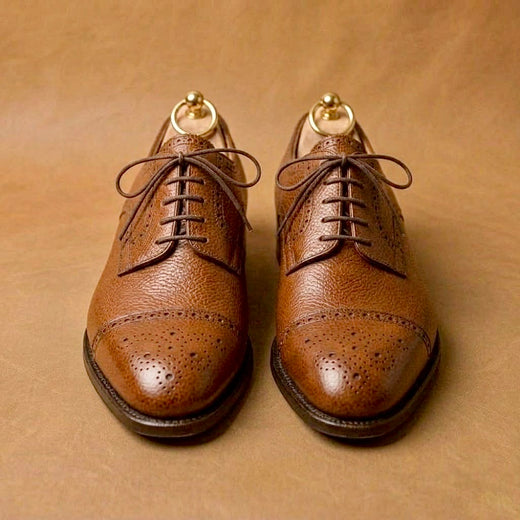
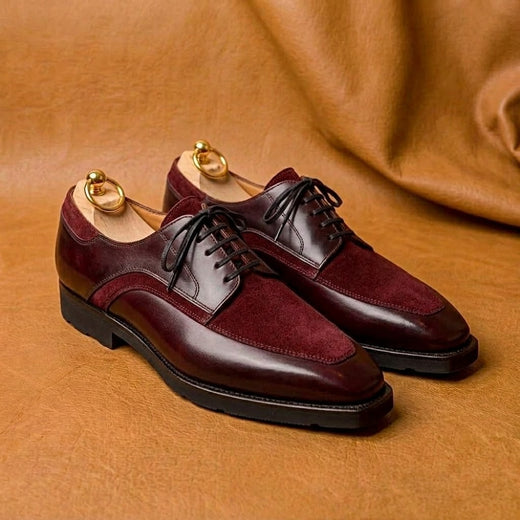
| Derby (blucher) | Best | Open lacing lets the facings spread as wide as you need |
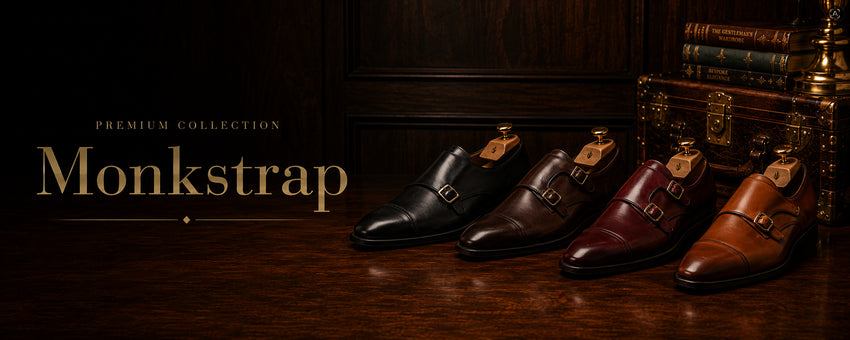
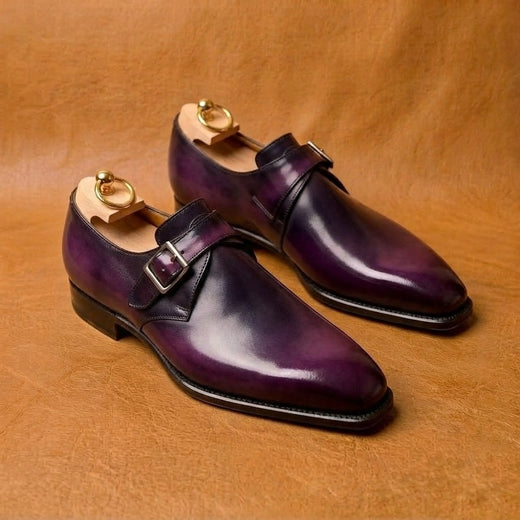
| Monk strap | Very good | The strap adjusts; double monks give two points of adjustment |
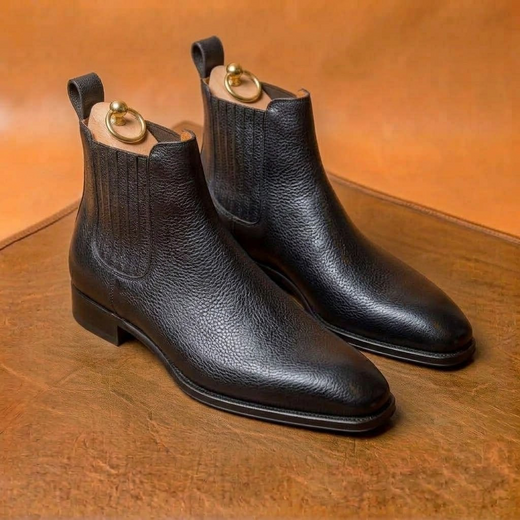
| Chelsea boot | Good | Elastic sides give a little; choose the right width |
| Loafer | Fair | No adjustment at all, so width must be exact |
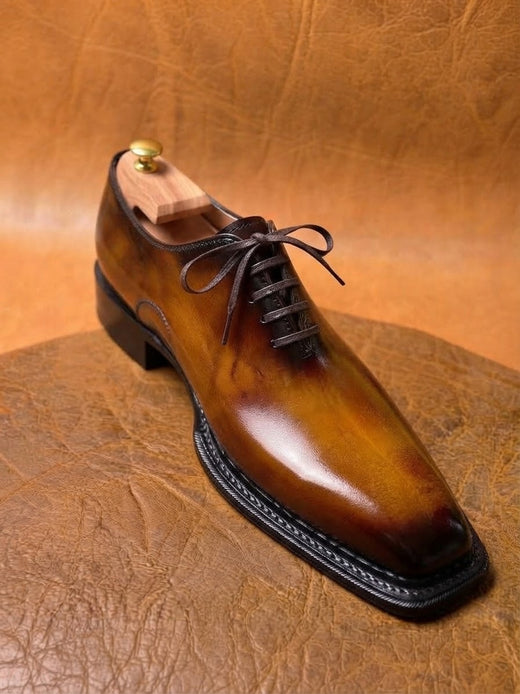
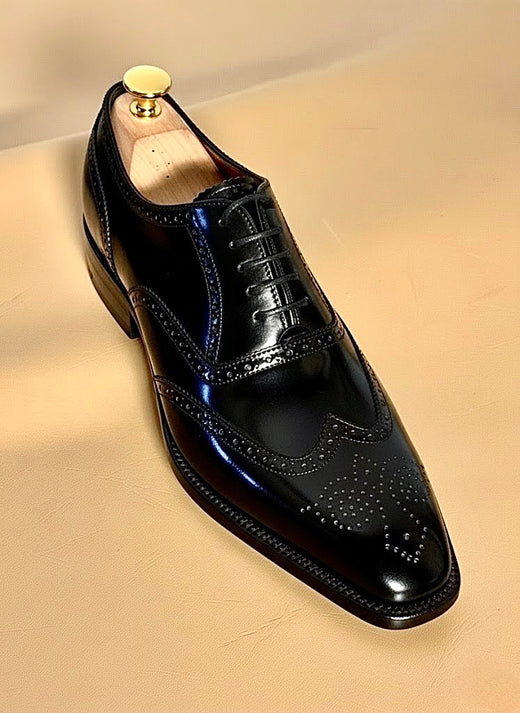
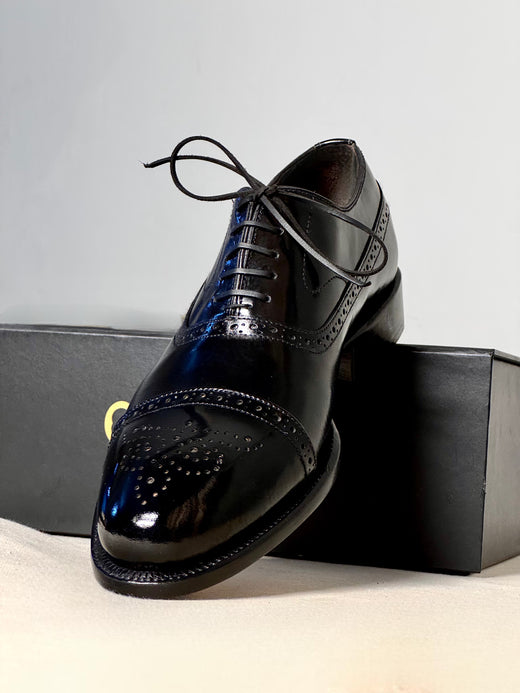
| Oxford (balmoral) | Least forgiving | Closed lacing sits in a fixed V over the instep |


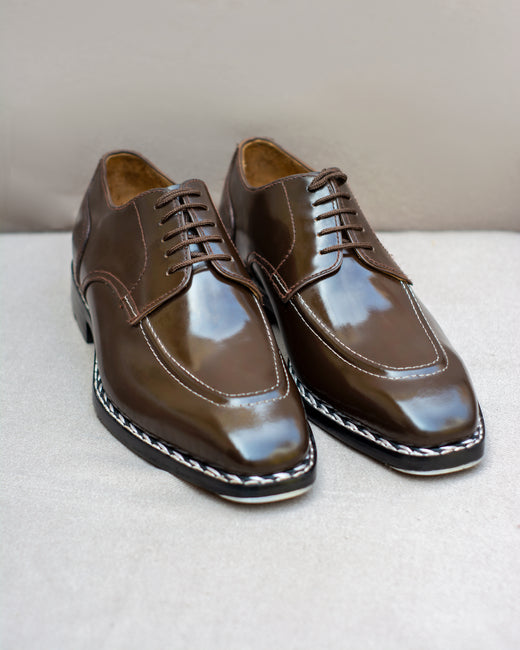
Read more in how to wear derby shoes, our monk strap guide and brogues vs oxfords vs derbies. Shop derby shoes and monk straps.
Wide Forefoot vs High Instep
Not every "tight" shoe is too narrow. Two different fit problems feel similar:
| Problem | Where you feel it | Fix |
|---|---|---|
| Wide forefoot | Sides of the foot across the toes and ball | A wider width (E, EE, EEE) |
| High instep | Top of the foot, where the laces or strap sit | A derby or monk strap; adjust the lacing |
| Both | Sides and top | A wider derby or monk, ideally made to order |
If oxfords never fit you, a high instep is the usual reason, and a derby is the answer.
Why Made-to-Order Solves Width Problems
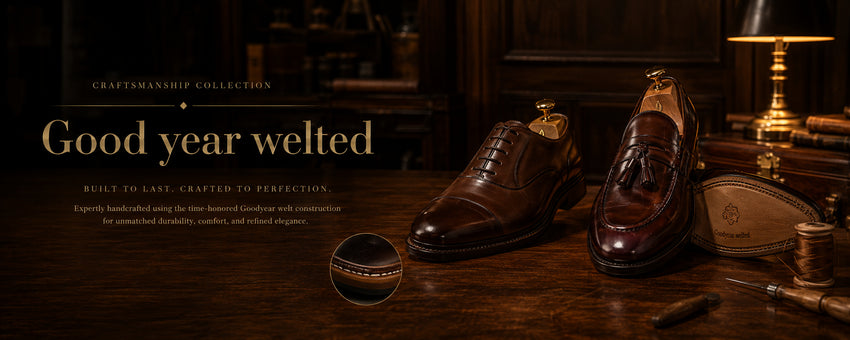
Most dress shoe brands make only D, or D and E, because every extra width needs its own stock in every size. Made-to-order shoes are built after you order, so the width is chosen for you rather than taken off a shelf. Every WhimsicalWalk pair is made in widths D, E, EE and EEE, Goodyear welted, with 15-day returns.

Start from our men's shoes collection, read about our made to order service, or compare bespoke vs made-to-order shoes.
FAQs
What does D width mean in men's shoes?
D is the standard, or medium, width for men's shoes. If a men's shoe does not list a width, it is almost always a D. It is wider than a narrow B and narrower than a wide E.
Is EE wider than E?
Yes. In men's shoes the order from narrow to wide is B, C, D, E, EE (2E), EEE (3E), EEEE (4E). Each extra E adds roughly 1/8 inch, about 3 to 5 mm, across the ball of the foot, while the length stays the same.
What is the difference between E and EEE shoe width?
EEE (3E) is two widths wider than E. E is wide, EE is extra wide and EEE is extra extra wide, so an EEE shoe is roughly 1/4 inch, or 6 to 10 mm, wider across the forefoot than an E in the same size.
Is 2E the same as EE?
Yes. 2E and EE are two ways of writing the same extra wide men's width, just as 3E means EEE and 4E means EEEE.
Should I size up for wide feet?
No. Going up in length makes the shoe longer, so your heel slips and the creases fall in the wrong place, while the forefoot is barely wider. Keep your length and choose a wider width such as E or EE.
How do I know if I need wide shoes?
If your little toe rubs or goes numb, the leather bulges over the sole at the ball of the foot, laced facings will not close, or you keep buying longer shoes for comfort, you probably need a wider width. Measure the widest part of your foot and compare it with a width chart.
Which dress shoes are best for wide feet?
Derby shoes are best, because the open lacing lets the facings spread. Monk straps are also good because the strap adjusts, and Chelsea boots have a little give in the elastic. Oxfords and loafers are the least forgiving and need the exact width.
Do leather shoes stretch in width?
A little. Leather softens and eases slightly across the width over the first few weeks, and a cobbler can stretch it a little more, but it never gets longer. A shoe that is painfully tight when new is the wrong width.