

Types of Men's Dress Shoes: Every Style Explained (With Names)
There are 7 core types of men's dress shoes: the Oxford, Derby, brogue, monk strap, loafer, Chelsea boot and chukka boot. Everything else is a variation of these: a wingtip is a brogue, a wholecut is an Oxford cut from one piece of leather, a split toe is a Derby with a seam down the middle, and a double monk is a monk strap with two buckles. Shoes with "laces that don't tie" are loafers, monk straps, Chelsea boots or elastic-laced Oxfords. For formality, the order runs from patent wholecut and black cap toe Oxford (most formal) down to suede loafers and chukkas (most casual).
What Is That Shoe Called? Quick Name Finder
Most people searching for shoe names know what the shoe looks like but not what it is called. Start here: find the feature you noticed, and the table gives you the name.
| What you noticed | The shoe is called | Shop / read more |
|---|---|---|
| Laces sewn under the front (closed lacing) | Oxford (Balmoral in the US) | Oxford shoes |
| Lace flaps sewn on top of the front (open lacing) | Derby (Blucher in the US) | Derby shoes |
| Small decorative holes punched in the leather | Brogue (the holes are called broguing) | Brogues |
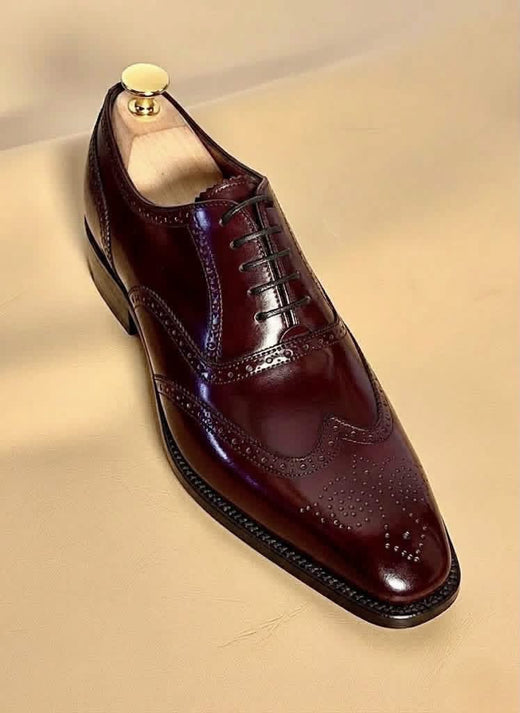
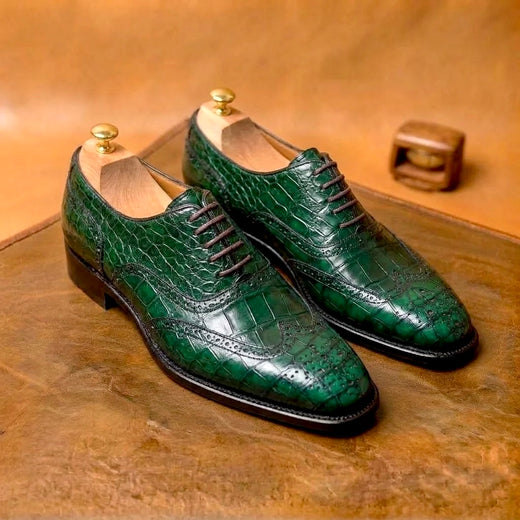
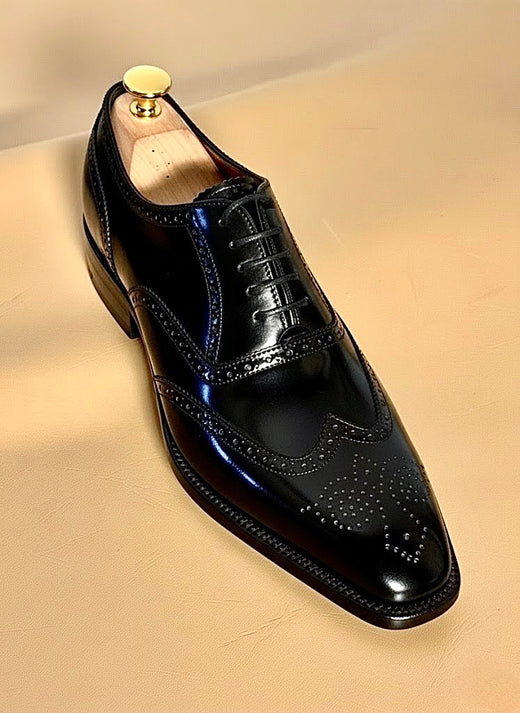
| Toe cap shaped like a "W" or bird wings | Wingtip (full brogue) | Wingtip shoes |
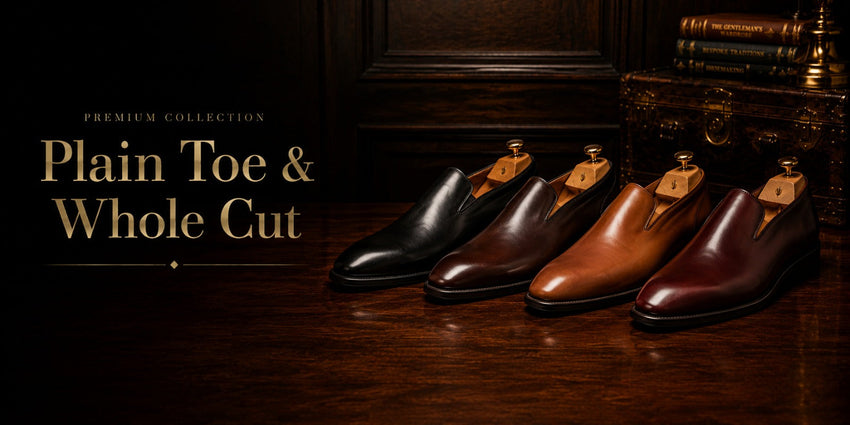
| One piece of leather, no seams on top | Wholecut | Plain toe and wholecut |
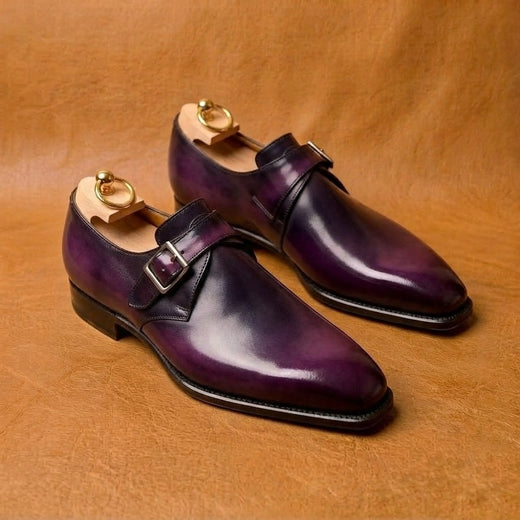
| A strap and buckle instead of laces | Single monk strap | Monk strap shoes |
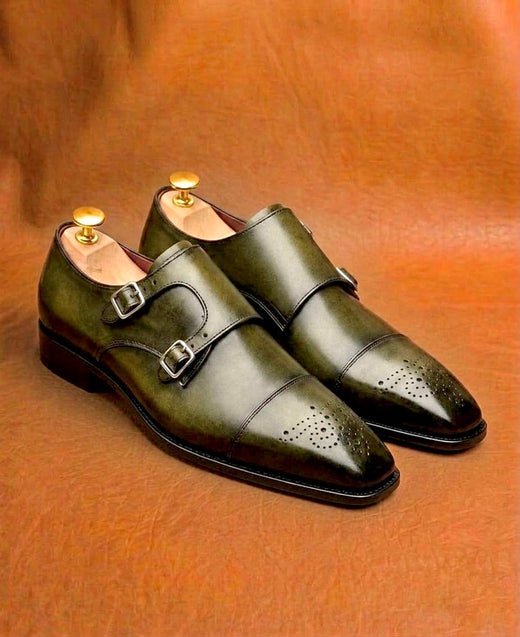
| Two straps and two buckles ("double buckle shoes") | Double monk strap | Double monks |
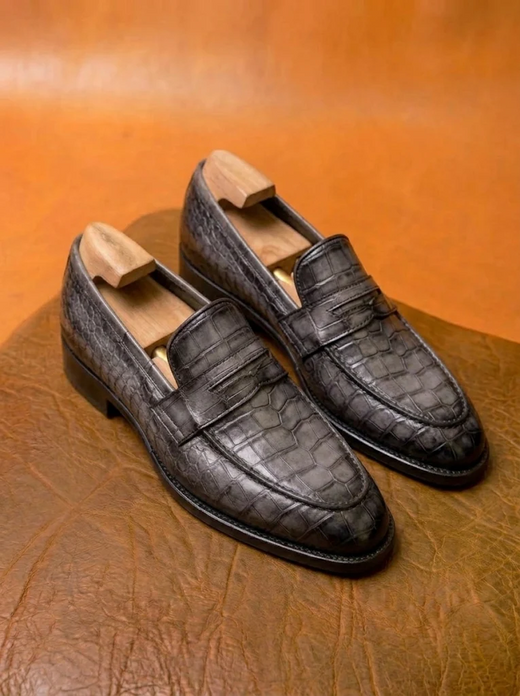
| Slip-on with a leather band across the top | Penny loafer | Loafers |
| Slip-on with small leather tassels | Tassel loafer | Penny vs tassel loafers |
| Slip-on, open back (no heel counter) | Mule | Mules |
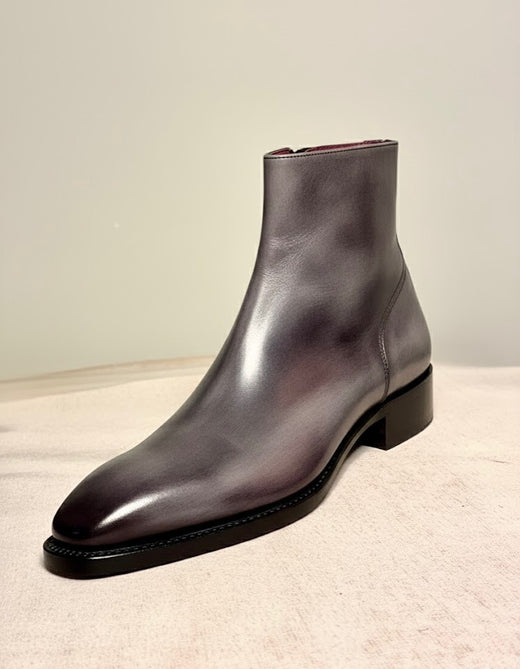
| Ankle boot with elastic side panels | Chelsea boot | Boots |
| Ankle boot with 2 or 3 pairs of eyelets | Chukka boot | Derby vs Chelsea vs chukka |
| Ankle boot with a strap that wraps around the ankle | Jodhpur boot | Boots |
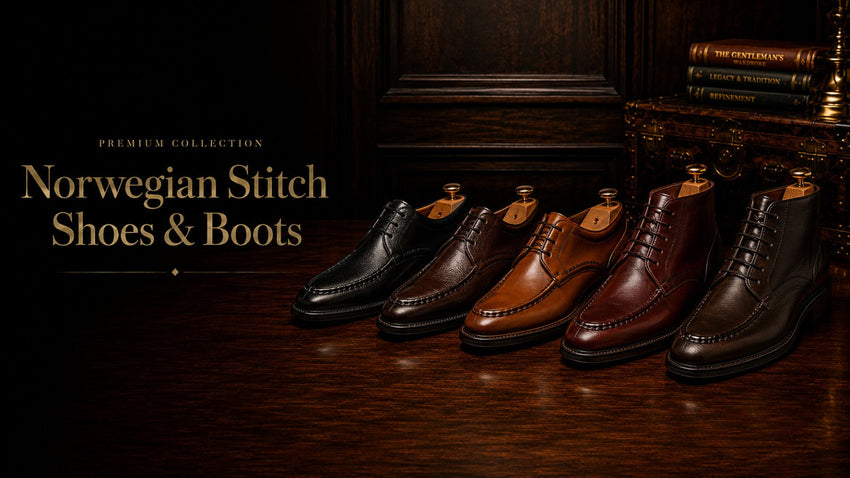
| A seam running down the middle of the toe | Split toe (often Norwegian stitched) | Norwegian shoes |
| A raised, hand-stitched ridge around the top of the toe | Apron toe / Norwegian stitch | Traditional Norwegian shoes |
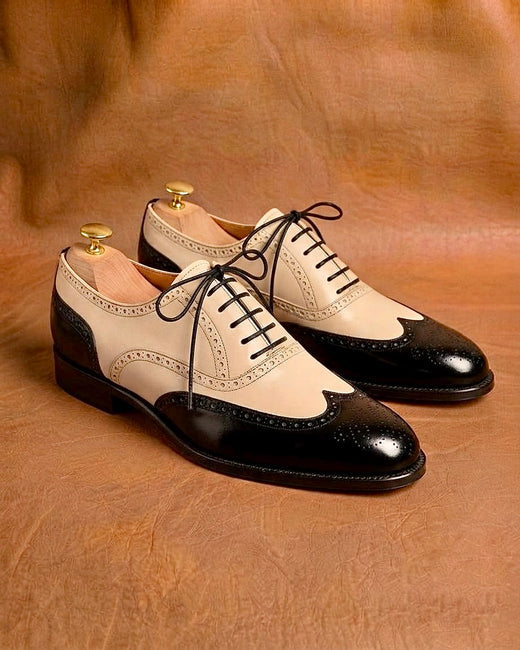
| Two contrasting colours, e.g. white and brown | Spectator (co-respondent) | Brogues |
| A fringed leather tongue over the laces or buckle | Kiltie | Monk straps |
1. Oxford Shoes (Balmorals)

An Oxford has closed lacing: the eyelet tabs (quarters) are stitched underneath the front of the shoe (the vamp), so they close into a neat "V" when laced. In the US it is also called a Balmoral or "Bal". Because the lacing sits flush, the Oxford is the sleekest and most formal laced shoe.
Oxford sub-types by toe:
- Plain toe: no seam across the toe. Clean and formal.
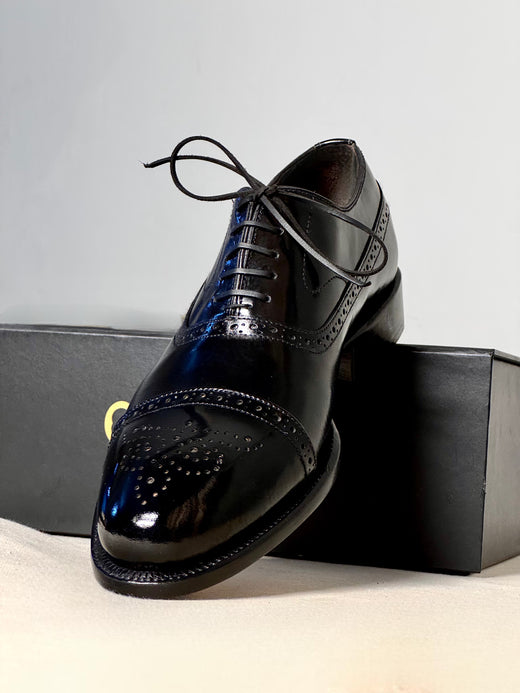
- Cap toe: a straight seam across the toe, the classic business shoe. A black cap toe Oxford is the safest single pair for suits, interviews, weddings and funerals.
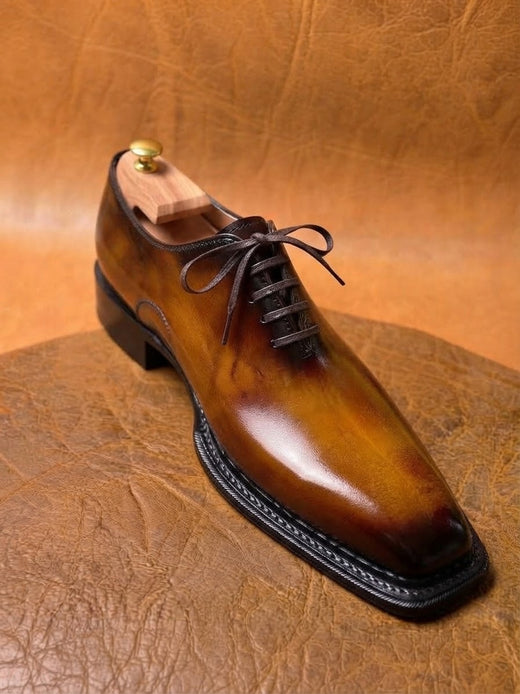
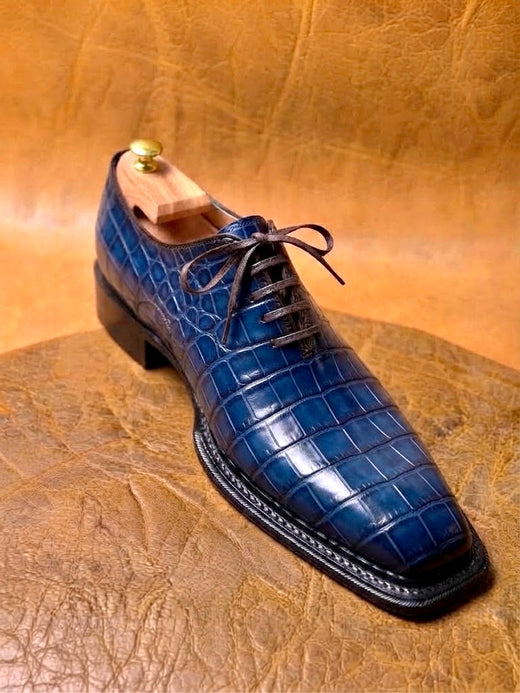
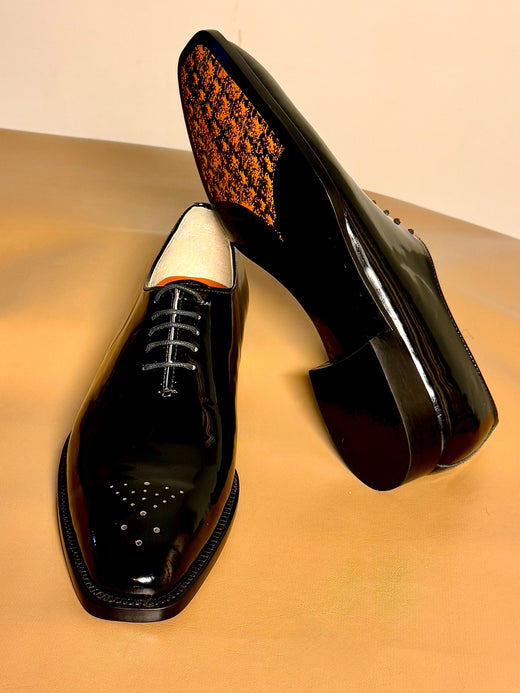
- Wholecut: the upper is cut from a single piece of leather with one seam at the back. Needs a large, flawless hide, which is why it costs more. In patent leather it is a black tie shoe.
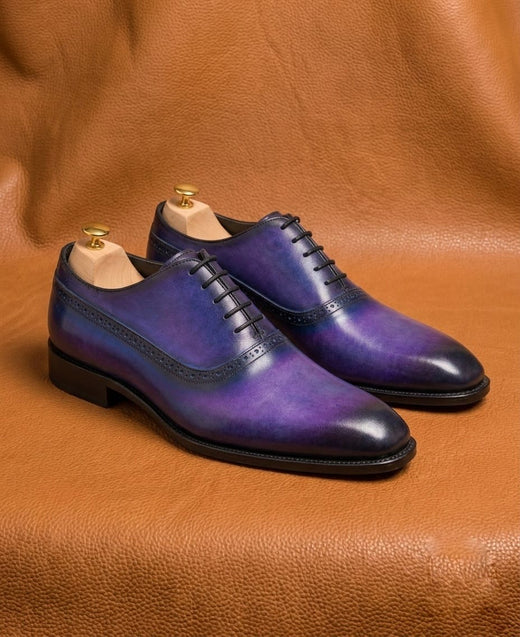
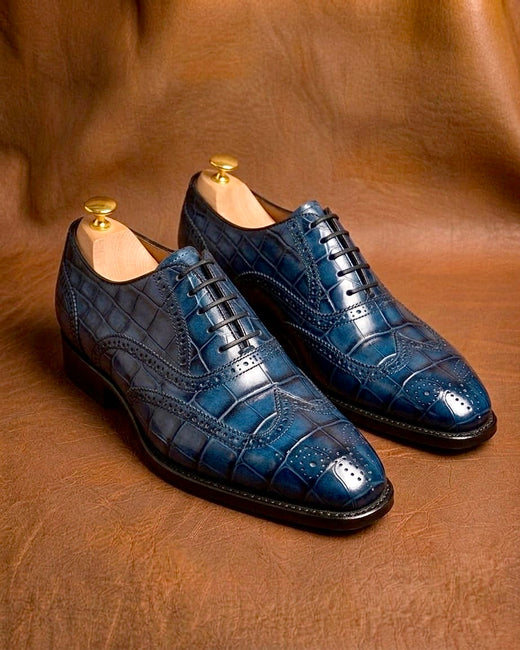
- Adelaide: the eyelet section is outlined by a U-shaped seam, often with broguing. Example: our Navy Blue Patina Adelaide Oxford.
- Balmoral (true): a seam runs from the heel along the side to the laces; the name is used loosely for all Oxfords in the US.
Browse the men's Oxford shoes collection, or read Brogues vs Oxfords vs Derbies if you are unsure which construction you need.
2. Derby Shoes (Bluchers)

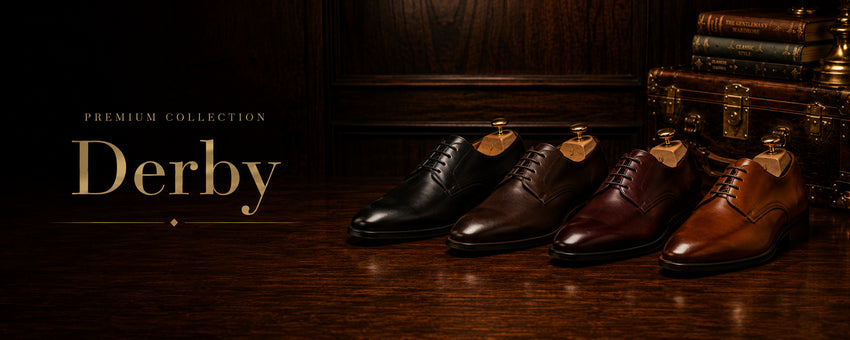
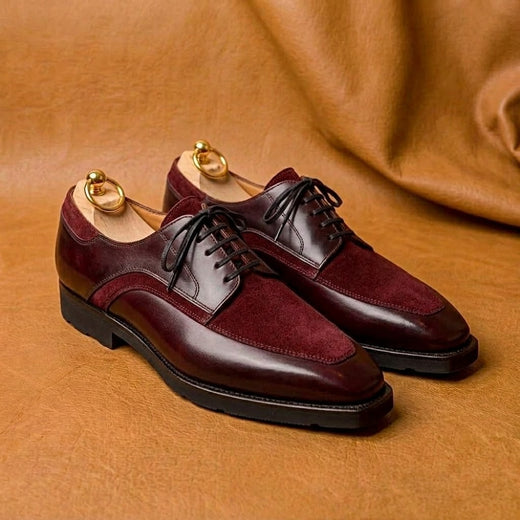
A Derby has open lacing: the eyelet flaps are sewn on top of the vamp, so they can open wide. Americans call it a Blucher. It looks slightly chunkier than an Oxford and is one step less formal, but it is easier to put on and fits a high instep or wide foot much better, because the flaps can open as far as you need.
- Plain toe and cap toe Derby: fine with business suits, especially in dark brown or black.
- Split toe Derby: a seam down the middle of the toe; see section 8.
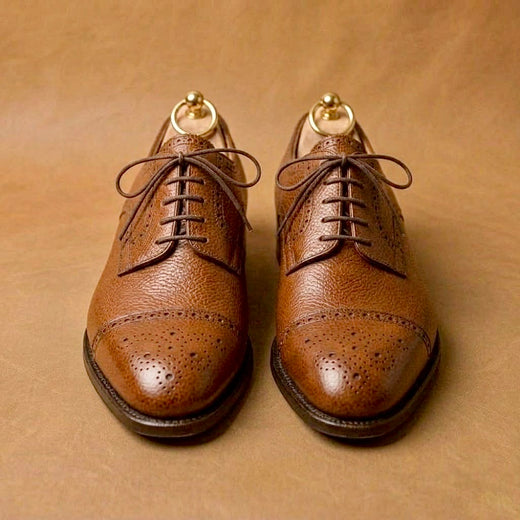
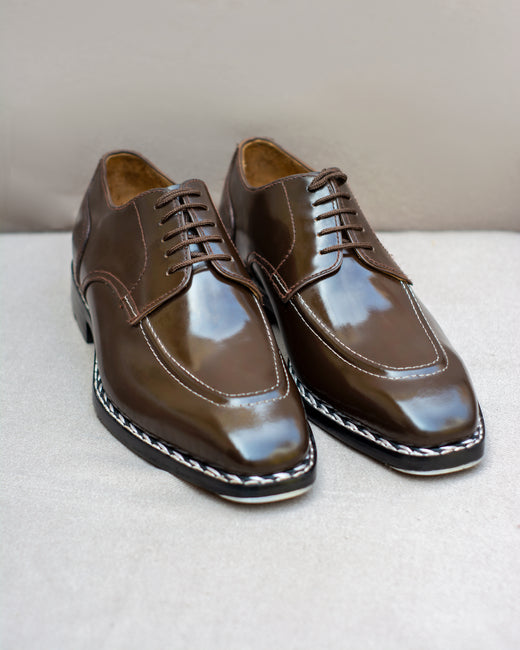
- Norwegian / apron toe Derby: a raised, hand-stitched seam around the toe, e.g. Men's Brown Norwegian Stitch Derby.
- Grain leather Derby: pebble or hatch grain hides scuffs and rain, the most versatile smart-casual shoe.
See the Derby shoes collection.
3. Brogues (Quarter, Semi, Full and Longwing)


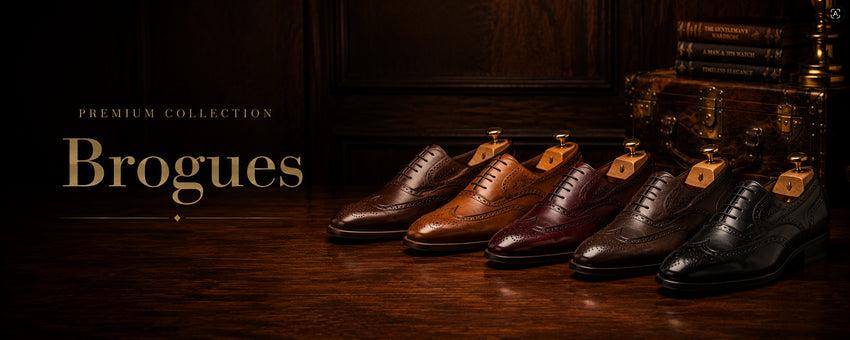
What does brogue mean? A brogue is any shoe or boot decorated with broguing: rows of small holes punched along the seams, often with serrated (pinked) edges. The word comes from the Gaelic bróg, "shoe". The holes started on Irish and Scottish country shoes, where they let water drain out after walking through wet ground. Today they are decorative.
Brogue is a decoration, not a shoe type, so a brogue can be an Oxford, a Derby, a monk strap or a boot. The amount of broguing sets the formality:
| Brogue type | Where the holes are | Formality |
|---|---|---|
| Quarter brogue | Along the toe cap seam only | Most formal brogue, fine with suits |
| Semi-brogue (half brogue) | Toe cap seam + a medallion (punched pattern) on the toe | Business and smart |
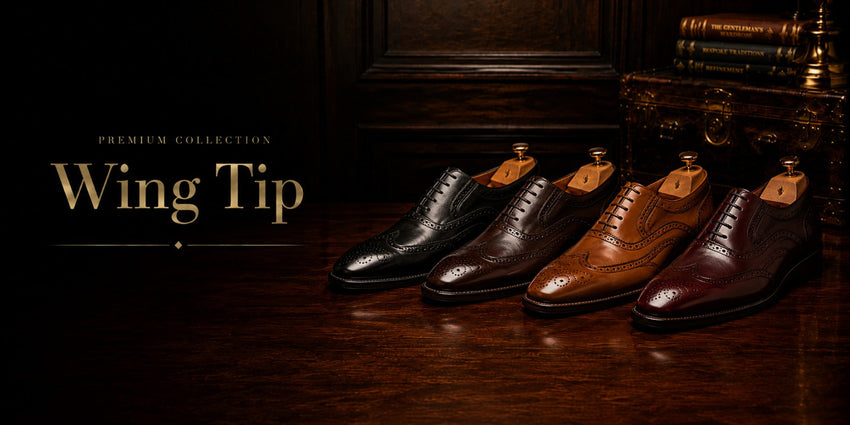
| Full brogue / wingtip | W-shaped toe cap whose "wings" run down the sides, plus medallion | Smart casual, business casual |
| Longwing | Wings run all the way round to the heel | Casual, American style |
| Blind brogue | Wingtip shape with no holes | Smart, understated |
Shop the brogue shoes collection and the wingtip collection, or read how to wear brogues.
4. Monk Strap Shoes (Single and Double Buckle)


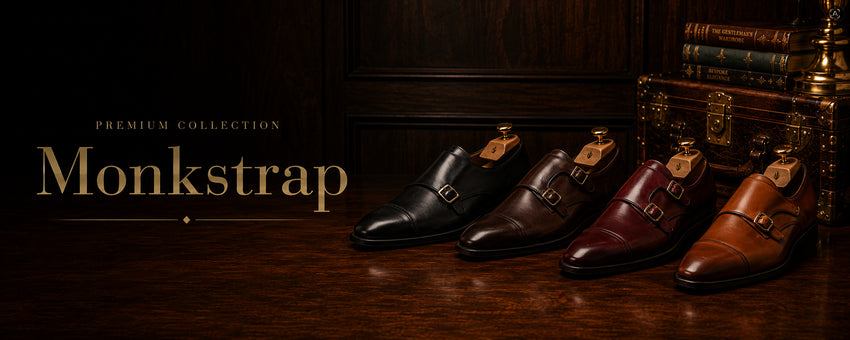
A monk strap replaces laces with a strap and buckle across the instep. It sits between the Oxford and the loafer in formality. If you searched for "double buckle shoes", the name you want is the double monk strap; a single buckle is a single monk, and three is a rare triple monk.
- Single monk: cleaner and slightly more formal; good with suits.
- Double monk: the more popular, more expressive style. Wear the top buckle fastened and, if you like the relaxed look, the lower one open.
- Kiltie monk: a fringed tongue over the strap, e.g. Black Suede Kiltie Monk Strap.
Full guide: monk strap shoes guide. Shop the monk strap collection.
5. Loafers (Penny, Tassel, Horsebit, Belgian, Venetian)


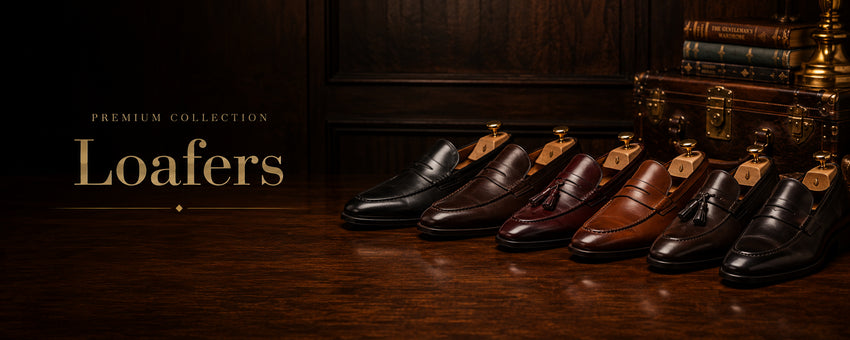
A loafer is a lace-free slip-on with a low heel. Most have a moccasin-style seam (apron) on the vamp. The type is named after the decoration on top:
| Loafer | Detail | Formality |
|---|---|---|
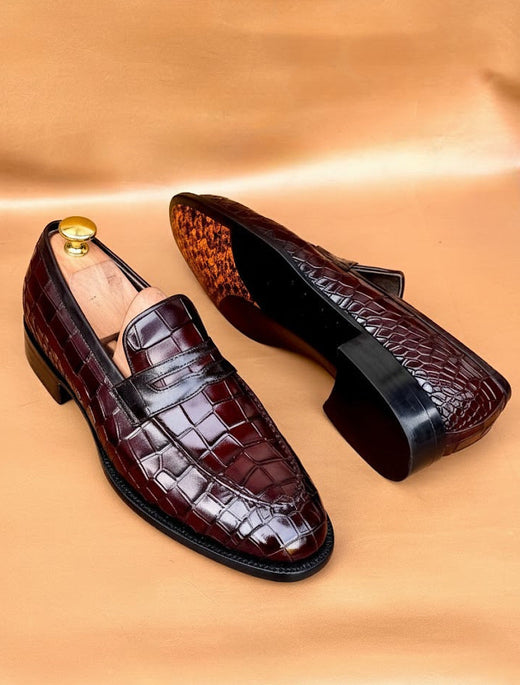
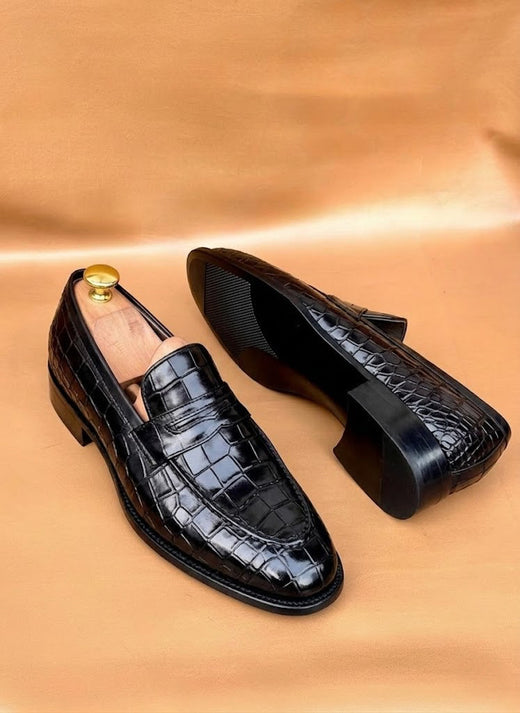
| Penny loafer | Leather band (saddle) with a slot across the vamp | Smart casual; black calf can work with a suit |
| Tassel loafer | Small leather tassels on laces | Smart, "Ivy" style; good with tailoring |
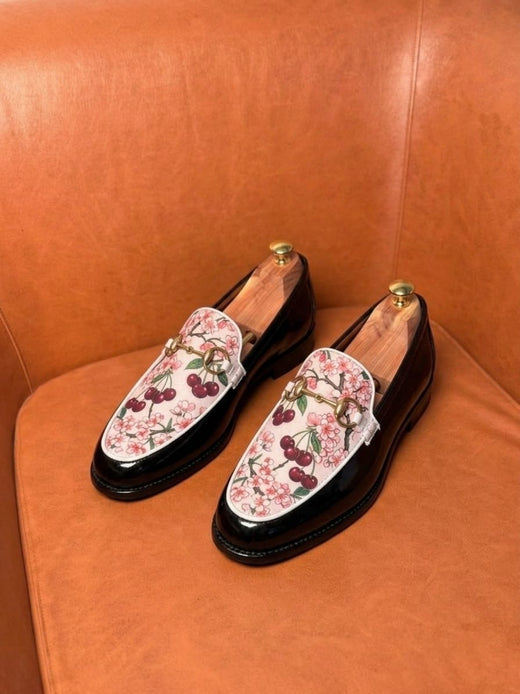
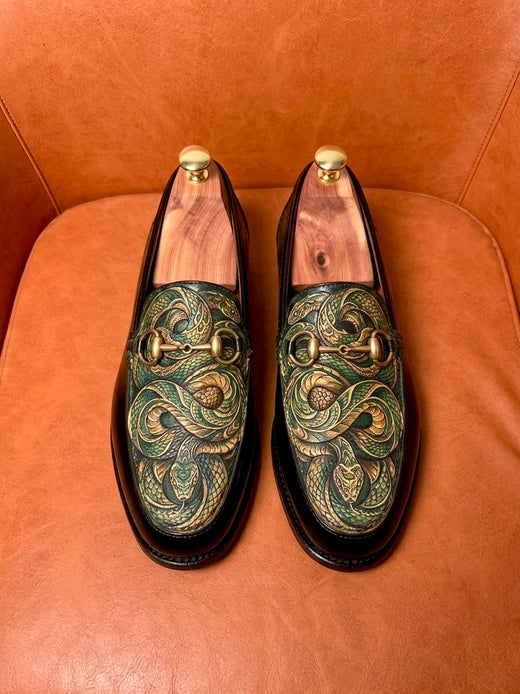
| Horsebit loafer | Metal bar shaped like a horse snaffle | Smart casual |
| Belgian loafer | Soft, unstructured, small bow on the vamp | Casual, evening |
| Venetian loafer | Plain vamp, no decoration | Most minimal |
| Bow loafer | A leather bow on the vamp | Evening / dressy casual |
Compare the two most popular types in penny loafers vs tassel loafers, or shop all men's leather loafers.
6. Mules

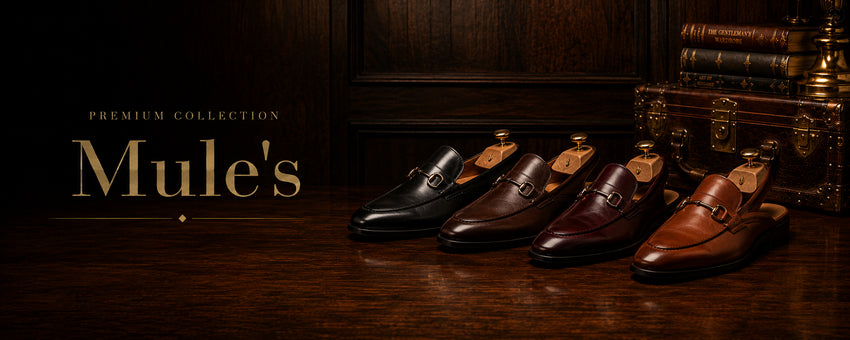
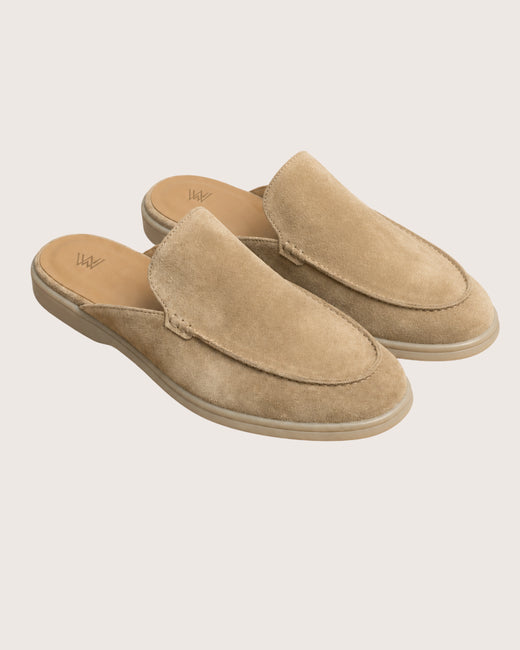
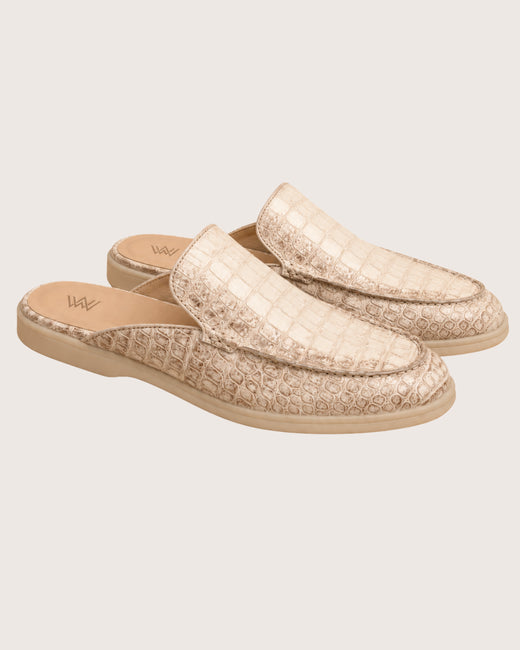
A mule is a backless slip-on: the front of a loafer with the heel counter removed. It is a summer and evening shoe, not for business dress codes. See the men's mules collection and our nubuck crocodile mules guide.
7. Dress Boots: Chelsea, Chukka, Jodhpur and Oxford Boots


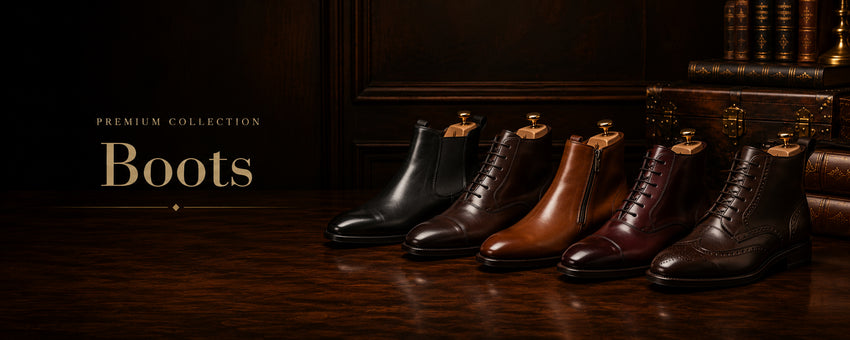
| Boot | How you recognise it | Wear it with |
|---|---|---|
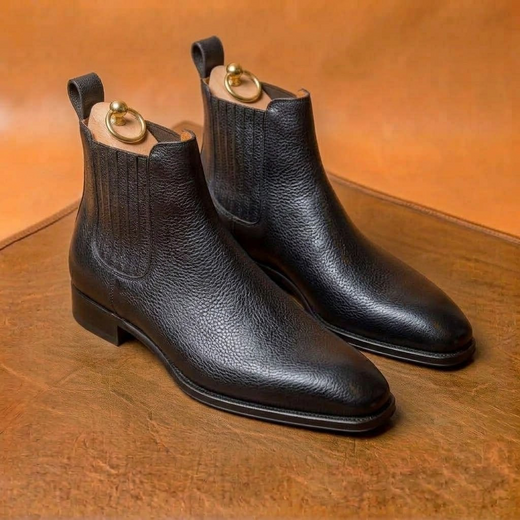
| Chelsea boot | Elastic side panels (gussets), pull tab, no laces | Suits (slim, dark leather) to jeans |
| Chukka boot | Ankle height, open lacing with 2-3 eyelet pairs | Chinos, jeans, casual tailoring |
| Desert boot | A chukka with a crepe sole, usually suede | Casual only |
| Jodhpur boot | A strap that wraps around the ankle and buckles on the side | Slim trousers, smart casual |
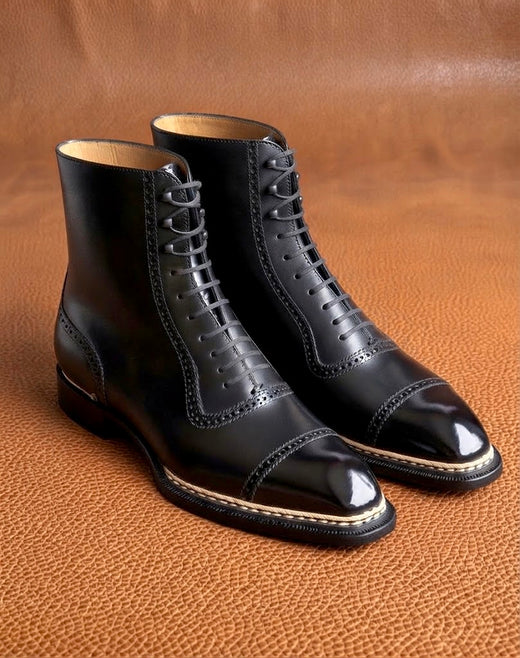
| Oxford / balmoral boot | Closed lacing, like an Oxford shoe made tall | Suits and winter tailoring |
| Derby boot | Open lacing, often on a commando or grain leather | Smart casual, bad weather |
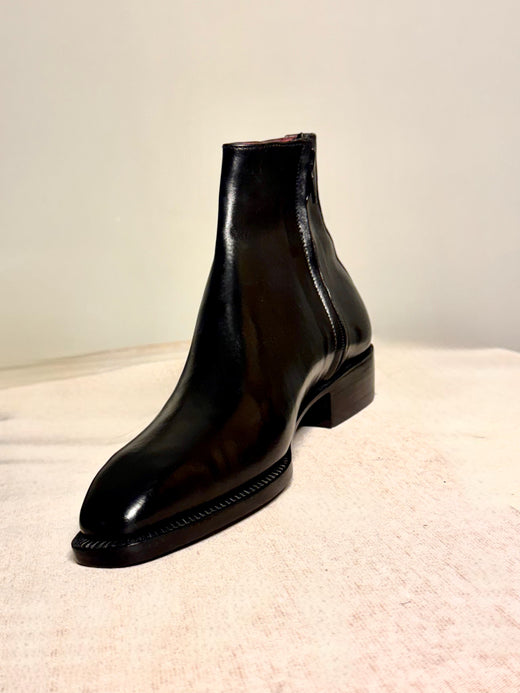
| Zip boot | A side zip instead of laces or elastic | Smart casual |
Shop men's leather boots; compare styles in Derby boots vs Chelsea vs chukka.
8. Split Toe, Apron Toe and Norwegian Shoes ("Seam Down the Middle")
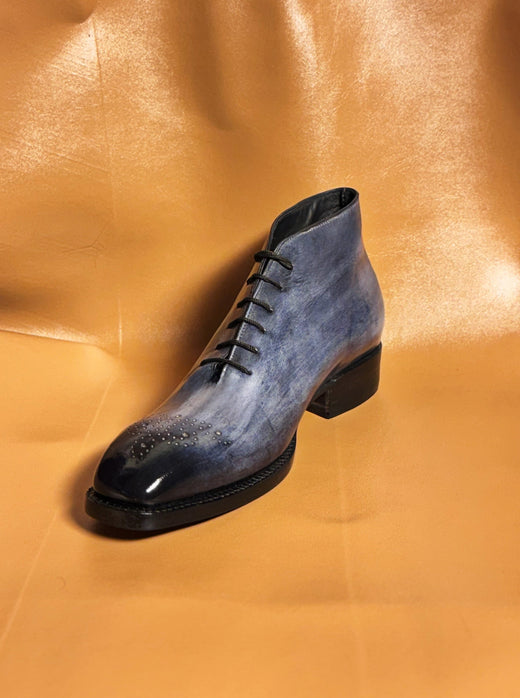
If you are looking for shoes or boots with a seam down the middle, you mean a split toe: a vertical seam runs from the toe up to the laces, joining two halves of the vamp. On fine shoes it is hand-stitched as a raised ridge.
- Split toe: a single seam down the centre of the toe, usually on a Derby or boot. Example: Black Split Toe Derby.
- Apron toe / moc toe: a seam that circles the top of the toe like an apron, as on a loafer.
- Norwegian (Norwegian stitch): the apron seam hand-sewn as a raised ridge, and often a Norwegian welt where the upper turns outward at the sole and is stitched twice for water resistance.
Learn the difference in Norwegian welt vs Goodyear welt and traditional Norwegian shoes, or shop the Norwegian shoes and boots collection.
9. Other Dress Shoe Types Worth Knowing

- Spectator (co-respondent): a two-tone brogue, classically white with brown or black. A 1920s summer shoe; bold today.
- Kiltie: a fringed leather tongue laid over the laces or strap, from Scottish country shoes.
- Opera pump: a black patent or velvet slip-on with a grosgrain bow; the most formal men's shoe, for white tie and black tie.
- Elastic-laced Oxford ("lazy man"): looks like a laced Oxford but the laces are elastic or fixed, so it slips on. Example: Black Lazyman Oxford.
- Side-lace and gusset shoes: laces or elastic on the side instead of the front.
- Tuxedo shoe: any patent leather plain-toe or wholecut Oxford worn with black tie, e.g. Black Patent Wholecut Oxford.
What Are Shoes With Laces That Don't Tie Called?
This is one of the most searched shoe questions, and there are four answers depending on what you mean:
| If the shoe… | It is called | Formality |
|---|---|---|
| Looks laced but slips on (elastic or fixed laces) | Elastic-laced Oxford / "lazy man" Oxford, or no-tie laces | Business casual |
| Has a buckle where laces would be | Monk strap (single or double) | Business to smart |
| Has no fastening at all | Loafer (penny, tassel, Belgian, horsebit) or mule | Smart casual |
| Is a boot with elastic sides | Chelsea boot | Smart to casual |
| Has decorative laces with tassels on the vamp | Tassel loafer | Smart casual |
Dress Shoe Formality Ladder (Most to Least Formal)
The most common mistake in shoe forums is not the style itself but wearing it at the wrong level of formality. Use this ladder; colour also matters: black is more formal than brown, smooth calf more than grain or suede.
| Rank | Shoe | Dress code |
|---|---|---|
| 1 | Patent opera pump / patent wholecut Oxford | White tie, black tie |
| 2 | Black plain toe or cap toe Oxford | Business formal, weddings, funerals, interviews |
| 3 | Wholecut Oxford (calf), quarter brogue Oxford | Business formal |
| 4 | Single monk strap, semi-brogue Oxford, plain Derby | Business |
| 5 | Double monk, full brogue / wingtip, Chelsea boot | Business casual |
| 6 | Penny and tassel loafers, split toe Derby, Oxford boots | Smart casual |
| 7 | Chukka, suede loafers, longwing, Belgian loafer | Casual |
| 8 | Mules, desert boots, spectators | Casual / statement |
For wedding and event dressing, the Premium and Exclusive lines are a good start: premium handcrafted shoes and exclusive luxury shoes.
Toe Shapes and Shoe Parts Explained
Shoe names also come from the shape of the toe and the parts of the upper. These terms appear in every product description, so they are worth knowing:
| Term | Meaning |
|---|---|
| Round toe | Classic, versatile shape; most Derbies and boots |
| Almond toe | Slightly elongated round toe; the modern dress default |
| Chisel toe | Squared-off, flattened front with angled sides; sharp and formal |
| Square toe | Wide, boxy toe; associated with Western boots |
| Vamp | The front of the upper covering the toes and instep |
| Quarters | The side and back pieces holding the eyelets |
| Toe cap | An extra piece of leather stitched across the toe |
| Medallion | The punched decorative pattern on a brogue toe |
| Welt | The leather strip that joins upper and sole; Goodyear and Norwegian welts allow resoling |
| Heel counter | A stiffener at the back that holds the heel in place (missing on mules) |
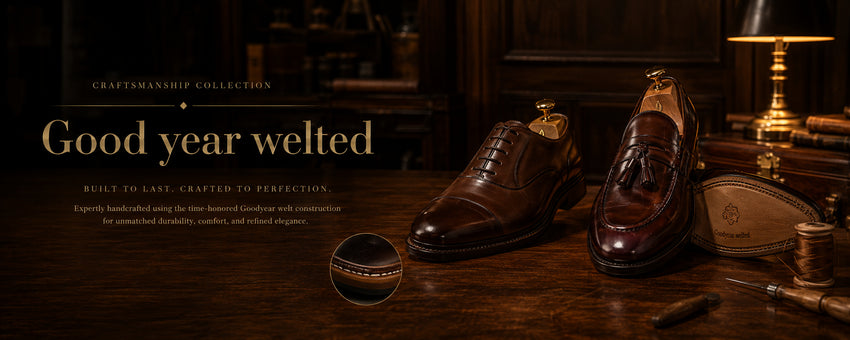
Construction matters as much as style for how long a shoe lasts: see are Goodyear welted shoes worth it and the Goodyear welted collection.
Which Dress Shoe Types to Buy First
The questions people ask most in men's style forums are: "I can only buy one pair, which one?", "Oxford or Derby?", "Black or brown?" and "Do brogues work with a suit?". Here is a simple order that answers all four:
- Black cap toe Oxford: covers every formal event. If you have wide feet or a high instep, choose a black plain Derby instead.
- Dark brown Derby or semi-brogue: office, chinos, navy and grey suits.
- Monk strap or loafer: the lace-free, smart-casual pair for warm weather and travel.
- Chelsea or chukka boot: autumn and winter, works with jeans and tailoring.
- One statement pair: a wingtip, patina, exotic leather or spectator once the basics are covered.
Find your style
Every type in this guide is handmade to order in your size and width.
Shop all men's shoesFAQs
What are the main types of men's dress shoes?
The seven core types are the Oxford, Derby, brogue, monk strap, loafer, Chelsea boot and chukka boot. Most other names describe a variation: a wingtip is a full brogue, a wholecut is an Oxford cut from one piece of leather, a split toe is a Derby with a seam down the middle, and a double monk is a monk strap with two buckles.
What are shoes with laces that don't tie called?
Shoes that look laced but slip on are elastic-laced Oxfords, sometimes called "lazy man" shoes or no-tie lace shoes. If the shoe uses a buckle instead of laces it is a monk strap; if it has no fastening it is a loafer or a mule; and an ankle boot with elastic sides is a Chelsea boot.
What are double buckle shoes called?
Double buckle dress shoes are called double monk straps, or double monks. They are a monk strap shoe with two straps and two buckles across the instep. A shoe with one buckle is a single monk strap.
What does brogue mean?
A brogue is a shoe decorated with broguing, which is rows of small punched holes along the seams, often with a punched medallion on the toe. The word comes from the Gaelic word for shoe. Broguing can be added to Oxfords, Derbies, monk straps and boots, and the more holes a shoe has, the more casual it is.
What are boots with a seam down the middle called?
A boot or shoe with a seam running down the centre of the toe is called a split toe. When the seam is hand-stitched as a raised ridge around the toe it is called an apron toe or Norwegian stitch. Split toe boots and Derbies are smart-casual rather than formal.
What is the difference between an Oxford and a Derby?
An Oxford has closed lacing, with the eyelet tabs sewn under the vamp, so it looks sleek and is more formal. A Derby has open lacing, with the eyelet flaps sewn on top, so it opens wider, is easier to put on and suits a high instep or wide foot better.
What is the most formal men's dress shoe?
The most formal is the patent leather opera pump, followed by a black patent plain toe or wholecut Oxford for black tie. For business and daytime formal events the most formal choice is a black cap toe or plain toe Oxford in smooth calf leather.
Is a wingtip the same as a brogue?
A wingtip is one kind of brogue. Its toe cap has a W shape with "wings" that run down the sides of the shoe, and it is fully decorated with broguing, so it is also called a full brogue. Quarter brogues and semi-brogues have broguing but no wingtip.