











Best Men's Dress Shoes and Boots for Winter and Wet Weather
The best men's dress shoes for winter and wet weather are grain leather derbies and boots with a stitched (Goodyear or Norwegian) welt and a rubber or half rubber sole. Pebble and hatch grain hide water spots and salt marks better than smooth calf, derby and Chelsea boots keep slush off your socks, and rubber gives grip that leather soles do not. Avoid unprotected suede and new leather soles on icy days. Treat the leather with cream or wax before winter, clean off road salt the same day, and dry wet shoes slowly on shoe trees away from heat.
Key Takeaways
- Best leather: pebble or hatch grain, then smooth calf with wax; suede only if well protected.
- Best styles: derby boots, Chelsea boots, chukkas and grain derbies.
- Best sole: rubber or a half rubber sole for grip; leather soles are slippery on wet stone and ice.
- Construction: Goodyear or Norwegian welted, so the sole can be replaced after a hard winter.
- Care: protect before winter, remove salt the same day, dry on shoe trees, never next to a heater.
Which Leather Is Best for Rain and Snow?
| Leather | Rain and snow | Salt and scuffs | Verdict |
|---|---|---|---|
| Pebble / hatch grain calf | Very good once waxed | Texture hides water spots and scuffs | Best all-round winter leather |
| Smooth full grain calf | Good with wax polish | Shows salt lines and water marks | Fine with care |
| Suede | Fair, only with protector spray | Salt stains easily | Dry, cold days |
| Nubuck | Fair with protector | Marks easily | Dry days |
| Patent leather | Water runs off | Cracks in deep cold | Evening only |
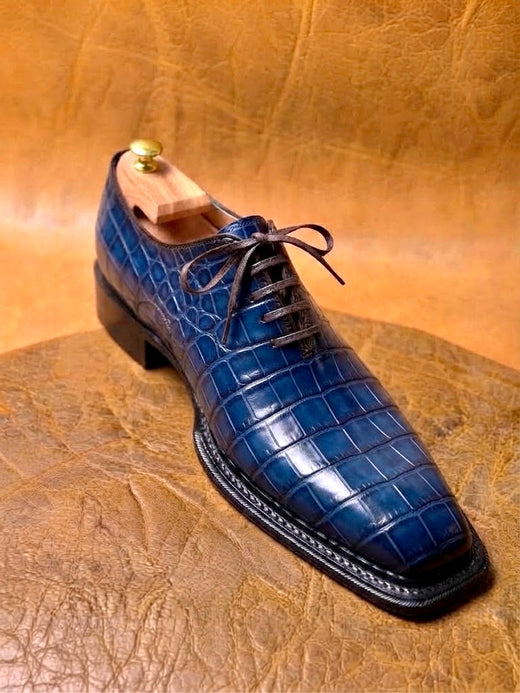
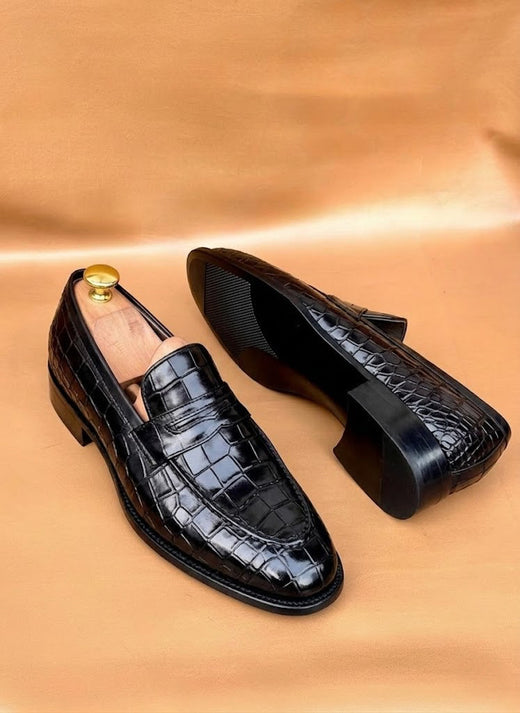
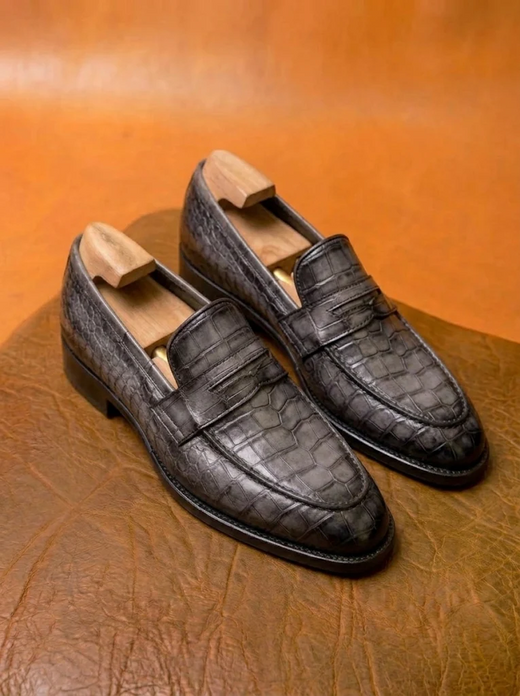
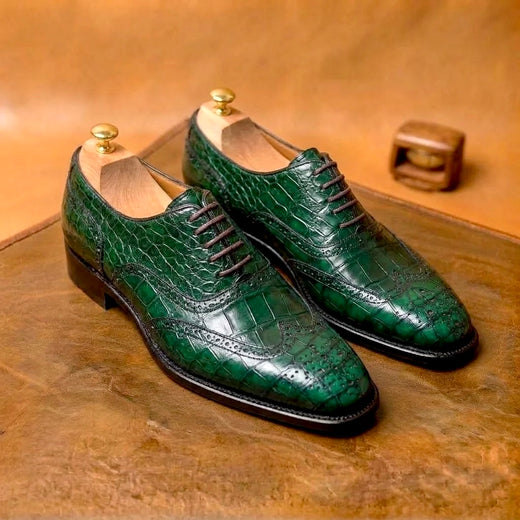
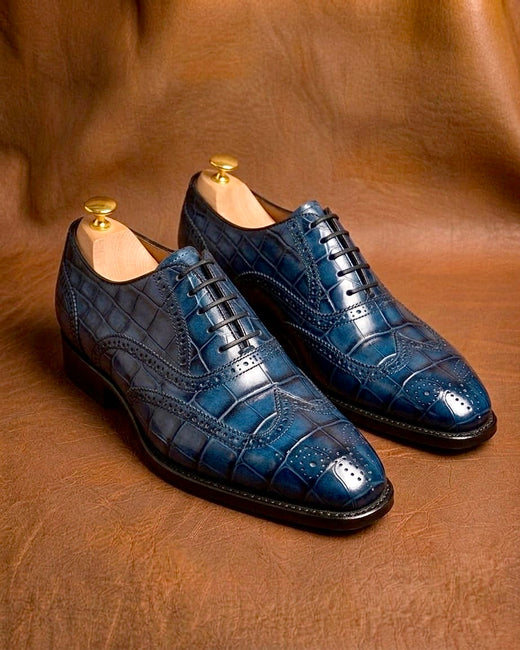
| Exotic (croc, ostrich) | Avoid soaking | Needs special care | Save for dry days |


Grain leather has a pattern pressed into the surface, so marks that would stand out on smooth calf disappear into the texture. For the difference between napped leathers, see nubuck vs suede.
Best Shoe and Boot Styles for Winter
| Style | Why it works in winter | Wear with |
|---|---|---|
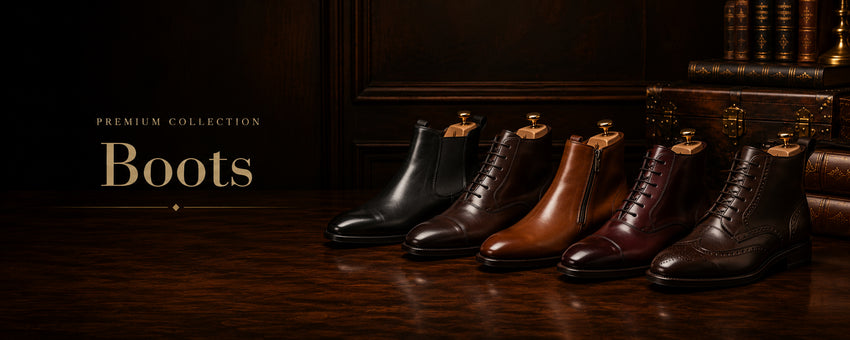
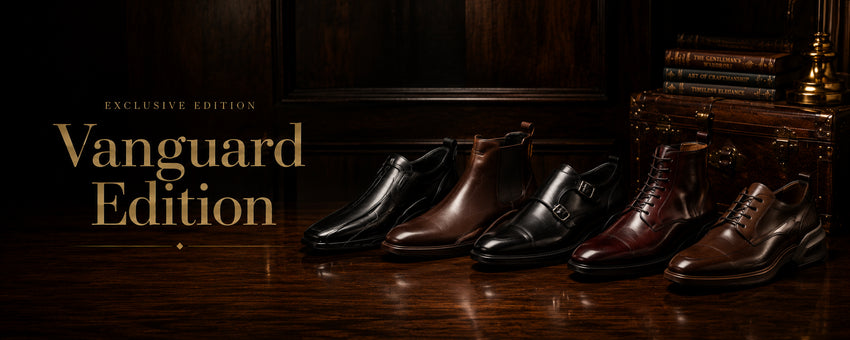
| Derby boot | Ankle cover, open lacing for thick socks | Jeans, cords, flannel |
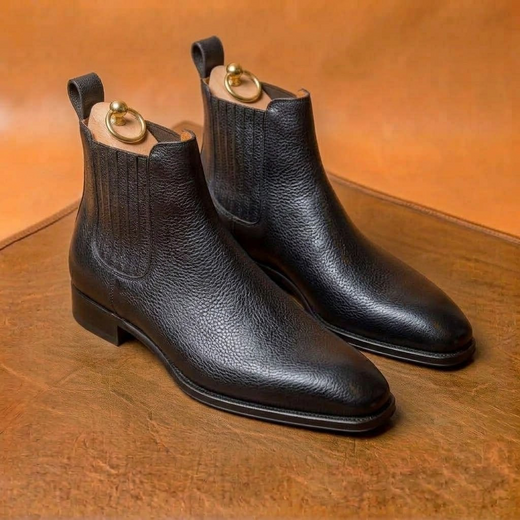
| Chelsea boot | No laces to soak, quick on and off | Suits to jeans |
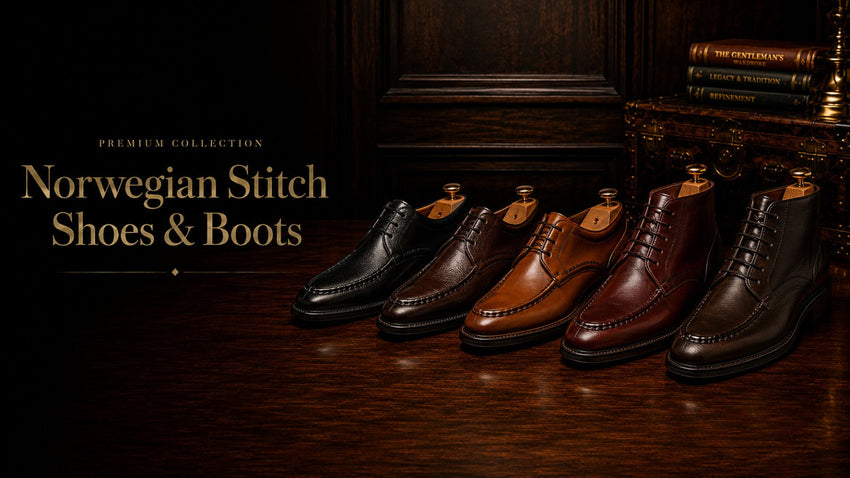
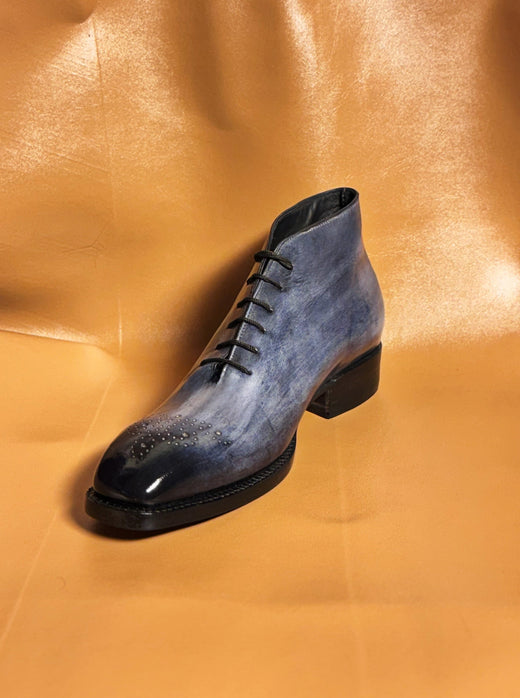
| Norwegian stitch boot / oxford boot | Raised hand-stitched apron, sturdy build | Flannel, tweed, dark denim |
| Chukka boot | Light, ankle height, easy to wear | Chinos, jeans |
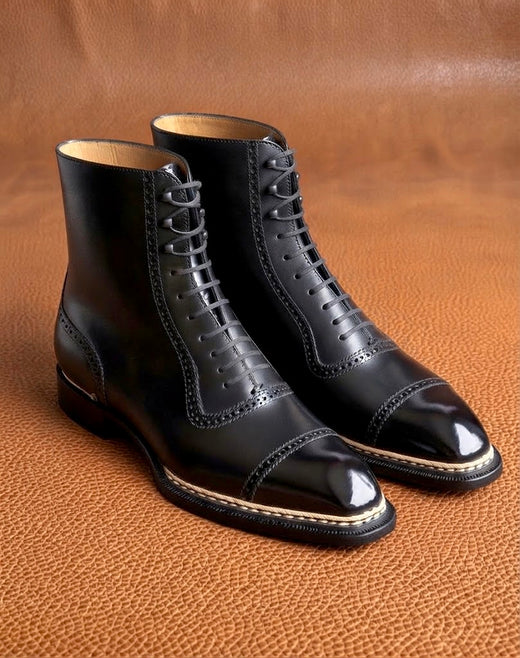
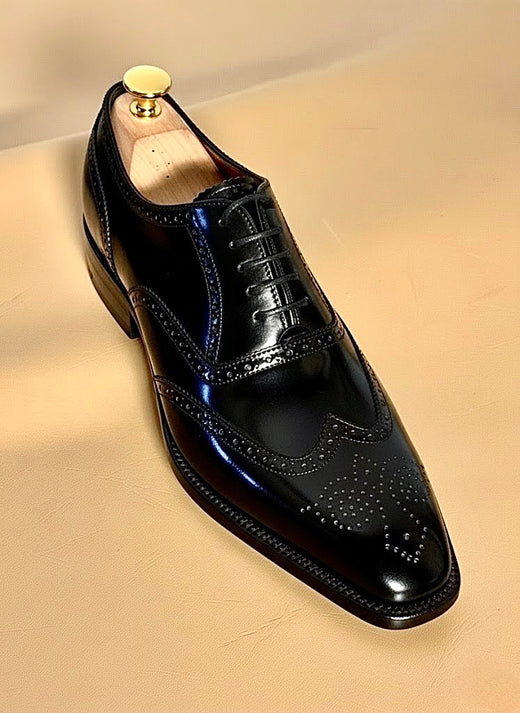
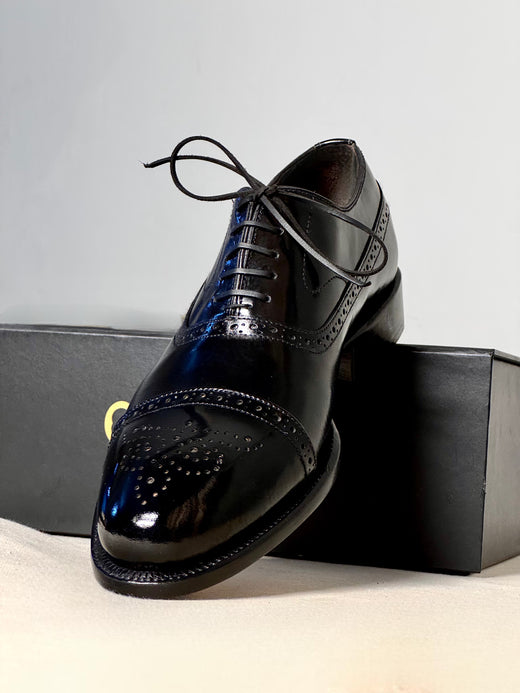
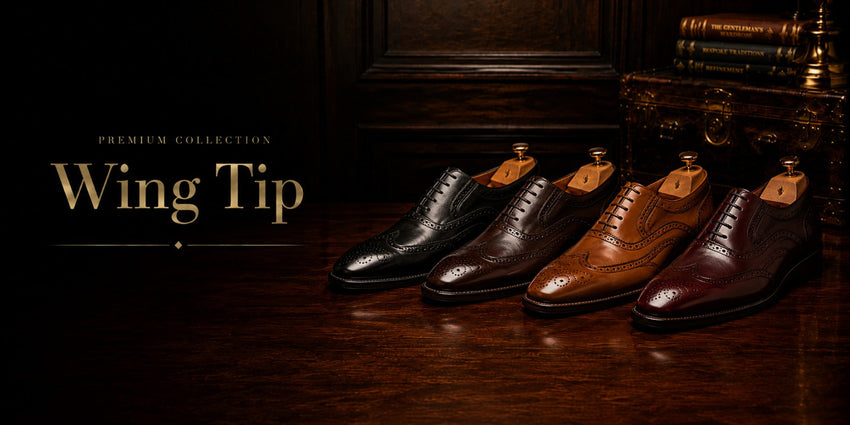
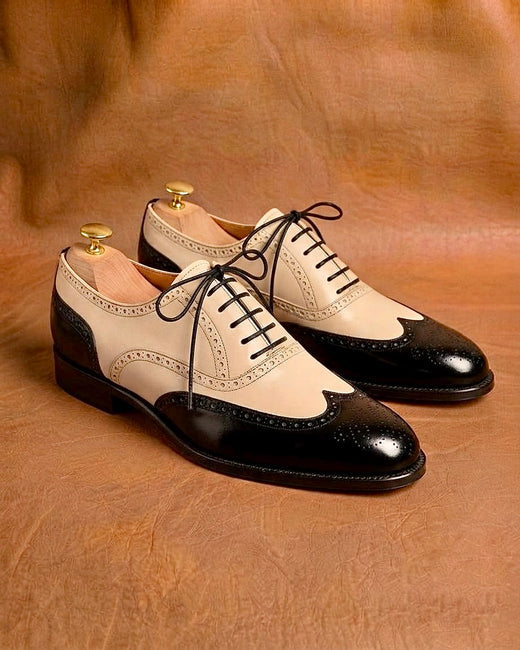
| Brogue / wingtip boot | Smart and sturdy | Tweed, flannel, jeans |
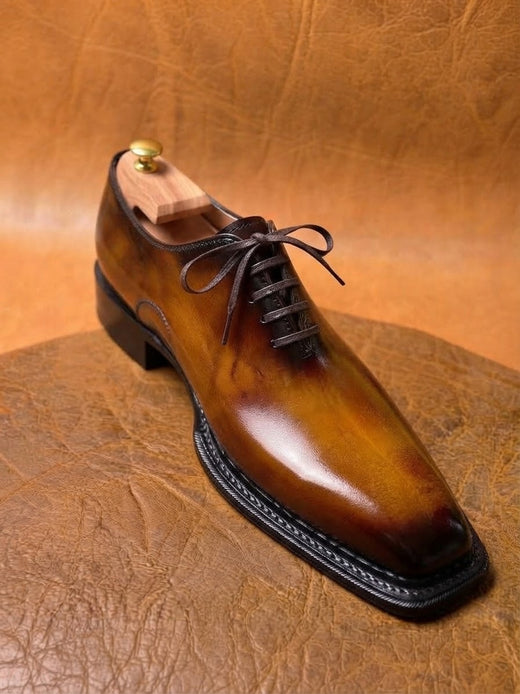
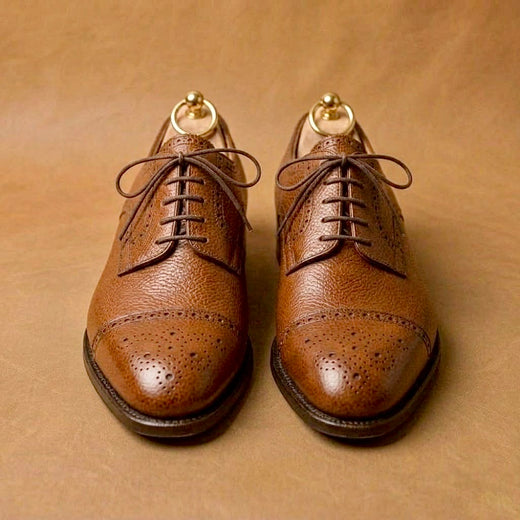
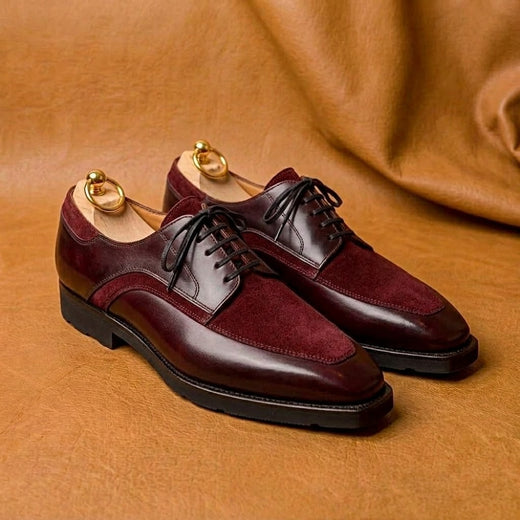
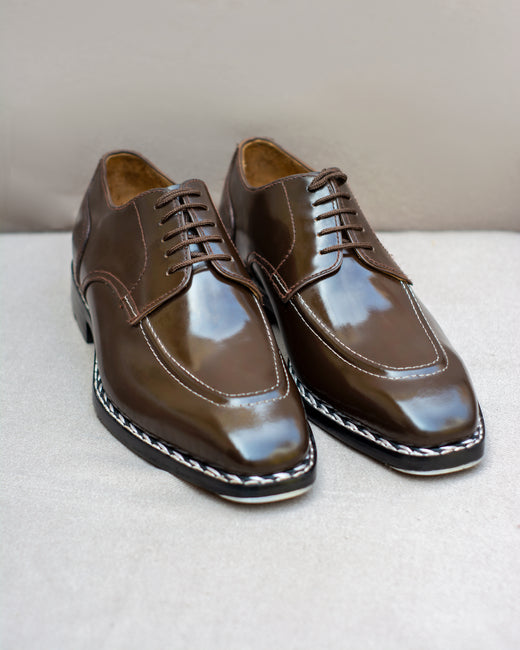
| Grain leather derby | A shoe that still looks smart at work | Business casual, suits |
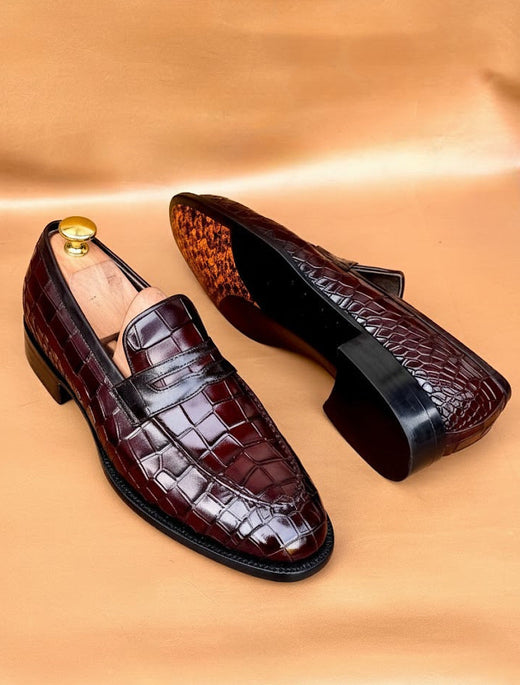
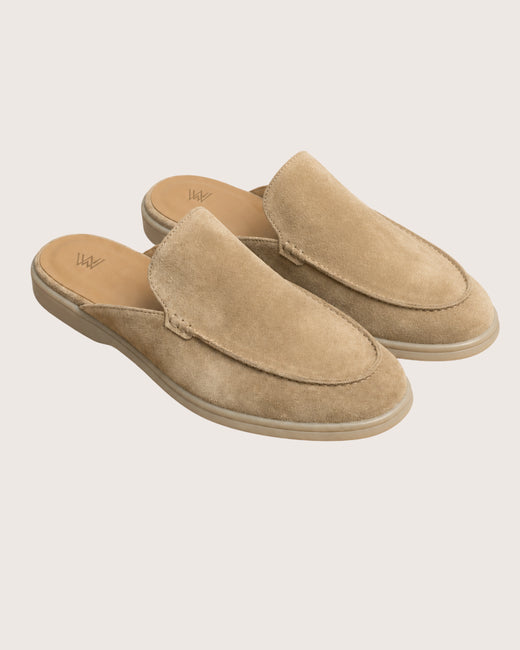
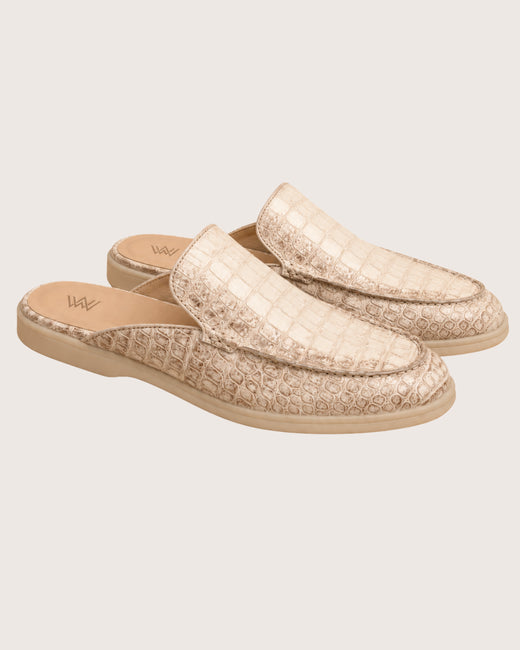
| Loafers and mules | Open to water and cold | Save for spring |


Compare boot styles in derby boots vs Chelsea vs chukka and brogue boots for men, or shop all men's leather boots and Norwegian shoes and boots.
Soles and Construction: Grip and Water
| Feature | Winter verdict |
|---|---|
| Leather sole | Smart, breathable, but slippery on wet stone and ice |
| Half rubber sole (over leather) | Grip and protection, keeps the leather look from the side |
| Full rubber / commando sole | Best grip in snow, more casual look |
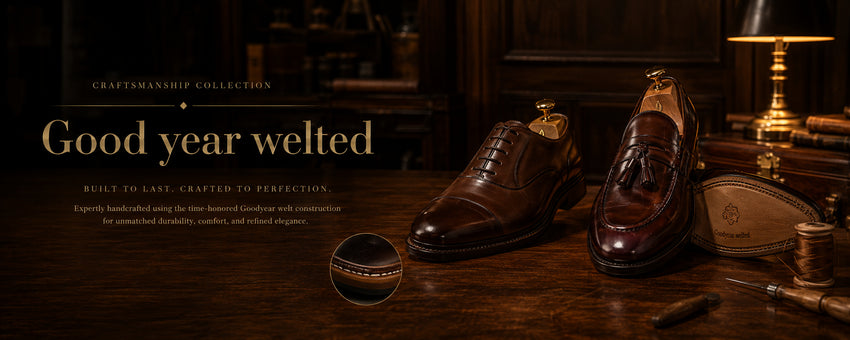
| Goodyear welt | Stitched sole that can be replaced after winter wear |
| Norwegian welt / stitch | Extra stitching that suits rugged, wet-weather shoes |
| Steel toe and heel tabs | Reduce wear on rough, gritty pavements |
Every WhimsicalWalk pair is Goodyear welted on a leather sole and made to order in US sizes 5 to 16.5 and widths D to EEE. For winter, add a half rubber sole for grip and steel toe and heel tabs for wear. Read more in Norwegian welt vs Goodyear welt and are Goodyear welted shoes worth it.
Winter Shoe Care: Before, During and After
The most common complaints on men's style forums in winter are white salt lines, soaked soles and leather that cracks after drying on a heater. All three are preventable.
- Before winter: clean and condition the leather, then add wax polish on smooth and grain leather, or a protector spray on suede and nubuck.
- On the day: wipe off snow and slush as soon as you arrive.
- Remove road salt the same day: wipe with a cloth dampened in a mix of roughly one part white vinegar to two parts water, then with plain water, and let dry.
- Dry slowly: stuff with paper or insert wooden shoe trees and dry at room temperature, never on a radiator or with a hairdryer.
- Re-condition: once dry, apply cream to put back the oils that water and salt removed.
- Rotate: do not wear the same pair two days running; leather needs a day to dry fully.
Winter Outfits That Work
| Occasion | Shoes | Outfit |
|---|---|---|
| Office | Black or dark brown grain derby, Chelsea boot | Flannel suit or wool trousers, overcoat |
| Weekend | Derby or brogue boots | Dark jeans, chunky knit, field jacket |
| Smart casual | Chukka or Norwegian stitch boot | Cords or chinos, wool blazer |
| Evening out | Burgundy Chelsea or black oxford boot | Dark trousers, roll neck, coat |


More outfit ideas: how to wear derby shoes with jeans, chinos and suits.
Shop winter-ready boots
Grain leather, Norwegian stitch and Chelsea boots, handmade to order in your size and width.
Shop men's bootsFAQs
What are the best men's dress shoes for winter?
Grain leather derbies and boots with a stitched welt and a rubber or half rubber sole. Pebble and hatch grain hide water and salt marks, derby and Chelsea boots keep slush off your socks, and rubber gives grip. Choose a Goodyear or Norwegian welted pair so the sole can be replaced after winter.
Can you wear leather sole shoes in the rain?
Yes, occasionally, but leather soles are slippery on wet stone and absorb water if soaked. Let them dry slowly on shoe trees afterwards. For regular wet weather, add a half rubber sole, which gives grip and protects the leather while keeping the leather sole look from the side.
Can you wear suede shoes in winter?
Only on dry, cold days and only after treating them with a suede protector spray. Suede absorbs water and road salt easily and can stain. Grain leather is a better choice for rain and slush, and smooth calf with wax polish is the next best.
How do you remove salt stains from leather shoes?
Wipe the white salt line with a soft cloth dampened in about one part white vinegar to two parts water, then wipe with plain water and let the shoes dry at room temperature on shoe trees. Once dry, apply a leather cream to replace lost oils. Do it the same day, before the salt dries into the leather.
Are Goodyear welted shoes waterproof?
No, but they are more water resistant than glued shoes because the sole is stitched to a leather welt and the construction is sturdier. Water can still enter through the leather and stitching if they are soaked. Wax the uppers, add a rubber or half rubber sole, and dry them properly after wet days.
What boots are best for winter with a suit?
A slim black or dark brown Chelsea boot or a black oxford boot in smooth or grain calf. They sit under suit trousers cleanly, keep your ankles dry and look sharp. Add a half rubber sole for grip on icy pavements.
How do you dry wet dress shoes?
Wipe off water, stuff them with newspaper or insert wooden shoe trees, and leave them at room temperature for at least 24 hours. Never use a radiator, heater or hairdryer, because fast drying makes leather shrink, stiffen and crack. Condition the leather once it is dry.
Should I add rubber soles to my dress shoes for winter?
Yes, if you walk on wet or icy pavements. A half rubber sole adds grip and protects the leather sole from wear and water, and it can be removed later by a cobbler. A full rubber sole gives the most grip but looks more casual.